

Each winter, the waters surrounding Baja California Sur become one of the most extraordinary wildlife destinations in the world. From December through April, thousands of whales migrate to the warm waters of the Baja Peninsula to breed, give birth, and raise their young.
For visitors staying at Sonadora Resort, whale watching is one of the most unforgettable experiences you can add to your Baja itinerary. And March is peak whale season, when sightings are frequent and conditions on the water are often ideal.
Whale Species You Might See in Baja
Baja’s waters host several whale species during migration season. Depending on where you go, you may see:
Gray Whales
These whales migrate more than 10,000 miles from Alaska to Baja’s protected lagoons. Gray whales are famous for their curiosity, some will approach boats and even allow visitors to gently touch them in the calm waters of nearby lagoons.
Humpback Whales
Known for spectacular breaches and tail slaps, humpback whales are commonly spotted along the Pacific coast near Cabo San Lucas and the southern tip of the peninsula.
Blue Whales
The largest animals on Earth occasionally appear in Baja waters during the migration season, particularly in the Sea of Cortez.
Orcas (Killer Whales)
Although less common, orcas (also known as killer whales) can be spotted in the waters of the Sea of Cortez during migration season. These highly intelligent marine predators travel in family groups called pods and are known for their striking black-and-white markings and coordinated hunting behavior. Seeing orcas in the wild is a rare and thrilling experience, as they are powerful, fast-moving animals that may surface suddenly alongside boats or be seen hunting fish and other marine life. For lucky visitors exploring Baja’s rich marine ecosystem, an orca sighting can become one of the most unforgettable moments of a whale watching trip.
Whale Sharks
While not actually whales, whale sharks are the largest fish in the ocean and are sometimes found in the waters of Baja California Sur. They are most commonly seen near La Paz, where plankton-rich waters attract them each season. The whale shark season typically runs October through early spring, so sightings can still occur in March depending on ocean conditions. When present, visitors may even have the chance to swim alongside these gentle giants with licensed guides in the Sea of Cortez.
Seeing any of these giants in their natural environment is a powerful reminder of the incredible biodiversity surrounding Baja California Sur.
Why Baja Is One of the Best Whale Watching Destinations in the World
Few places offer whale encounters as reliable and close as Baja California Sur. Several factors make this region exceptional:
Warm, protected waters ideal for whale breeding and calving
Massive seasonal migrations along the Baja coastline
Clear ocean conditions and abundant marine life
Ethical whale watching operators who respect wildlife
The region’s marine ecosystem is so rich that legendary ocean explorer Jacques Cousteau famously called the Sea of Cortez “the aquarium of the world.”
Pair Whale Watching with a Luxury Baja Escape
After an exhilarating day on the water, there’s nothing better than returning to the calm and comfort of Sonadora Resort.
Located along the beautiful shores of the Sea of Cortez, Sonadora offers a peaceful retreat where guests can unwind after their wildlife adventure—whether that means relaxing by the pool, enjoying a sunset dinner, or simply listening to the ocean.
Whale watching is more than a sightseeing activity—it’s a once-in-a-lifetime connection with one of nature’s most magnificent creatures. And spring in Baja is the perfect time to experience it.
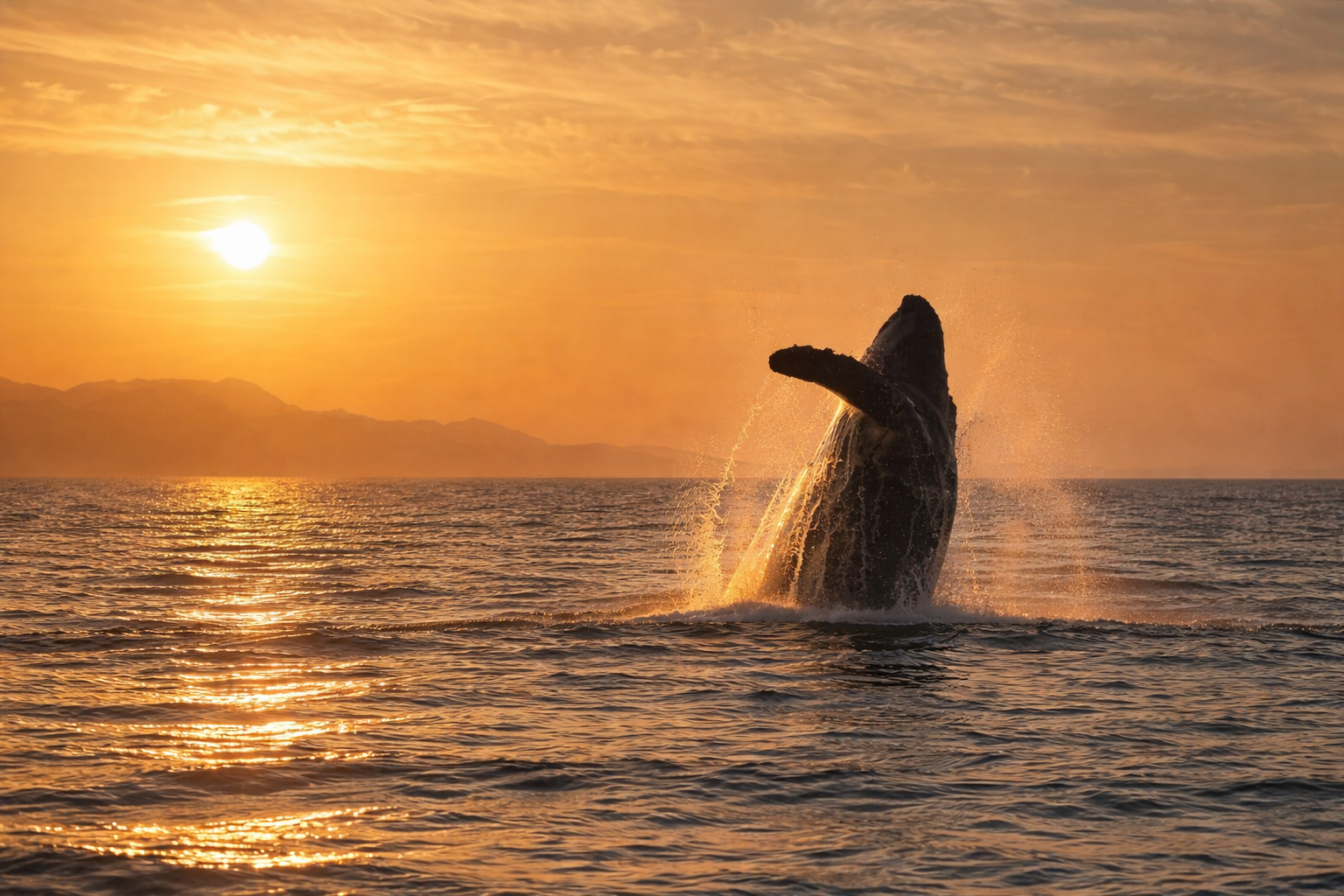
Humpback Whale showing off by Sonadora Resort at sunset in the Sea of Cortez